When Grief Feels Scary: October Support

When Grief Feels Scary: Finding Your Way Through October
October has a way of sneaking up on you, like my 12-year-old son who loves to scare me.
One day you're noticing some falling leaves, and the next, store windows are full of skeletons and tombstones, every neighbor's lawn is decorated with fake ghosts, and the world seems to be treating death like a costume. If you're grieving, that can feel jarring in a way that's hard to put into words.
Here's what we at Laurelbox want you to know first: if October feels heavier than usual, you are not overreacting. Grief and Halloween share complicated territory, and it makes complete sense that this season stirs something deep.
On a literary side note, I have been bewitched, body and soul (that’s a Pride and Prejudice movie reference for anyone who missed it) by the book series, “The Unselected Journals of Emma M Lion” by Beth Brower. The series follows a witty, fiercely independent young woman navigating love, loss, friendship, adventure, and grief through her journals in 1880s London. It is DELIGHTFUL and I highly recommend devouring the series. But I mention it to say that in Volume 4 Emma writes, “My feelings for October are fierce: a sharp love of cool air, a season transforming the landscape towards, and through, death.” It is shortly later that she gets some very jarring news that brings her immense grief. It seems like October and grief go hand-in-hand.
Let's talk about why grief can feel so scary this time of year, and what you can do to take care of yourself through it.
Why October Hits Differently When You're Grieving
Most people think of Thanksgiving or Christmas as the hardest holidays after a loss. And there is some truth to that. But October carries its own quiet weight that often catches grievers off guard.
The season itself is saturated with symbolism. Leaves fall. Days shorten. The air turns cold. Autumn has long been associated with endings, transitions, and decay, and that symbolism doesn't disappear just because it's also the season of pumpkin spice lattes and cute pet costumes.
Then there's Halloween specifically, which layers something else entirely on top: a culture-wide, unavoidable celebration of death imagery. Tombstones in front yards. Skeletons on porches. Ghosts in windows. For most people, these decorations are playful and fun. For someone who has recently lost a loved one, they can be genuinely difficult to look at, not because you're fragile, but because the loss you're carrying is real in a way that plastic skeletons are not.
The Grief Trigger Nobody Warns You About
Psychology Today describes past losses showing up during Halloween "like an uninvited spectral presence, which demands our attention and energy." That's exactly what grief triggers feel like: uninvited, sudden, and impossible to ignore.
These triggers can come from anywhere in October:
- Trick-or-treaters at the door, especially if you lost a child or are grieving someone who loved Halloween
- Costumes and parties that feel impossible to participate in when you're carrying sadness and feeling alone
- Death imagery everywhere, from decorations to movies to social media
- The changing season itself, which can echo the feeling of loss and impermanence
- Memories of past Halloweens with the person you're missing
None of these reactions mean something is wrong with you. They mean you loved someone, and that love doesn't have an off switch.
What Makes Grief Feel Scary
Grief is scary in ways we don't talk about enough. It's not just sadness. It can feel like fear, disorientation, anger, numbness, or all of those things at once, sometimes within the same hour.
Here are some of the most common "scary" feelings in grief that are actually completely normal.
The Fear That You're Forgetting Them
One of the most frightening parts of grief is the terror that, as time passes, the memories will fade. You might find yourself clinging to details, panicking when you can't remember exactly what their voice sounded like. Research on bereavement confirms this is one of the most universally reported fears among grievers — and it comes from love, not failure.
The Fear That the Pain Will Never End
In the early days of loss, grief can feel so enormous that it's hard to imagine ever feeling okay again. That fear of permanent pain is real, and it deserves to be named. What grief counselors remind us is that grief does not stay at its worst intensity forever. It changes shape. It becomes something you carry differently over time.
The Fear of Moving Forward
Many grievers feel a quiet guilt about having a good day, laughing at something, or slowly returning to life. It can feel like moving forward means leaving your loved one behind. Grief counselors at TAPS describe this as "recovery guilt" — the belief that joy somehow dishonors the person you lost. It doesn't. Healing and honoring can happen at the same time.
The Fear of Being "Too Much"
Grief can make you feel like a burden. Like you've been sad for too long or that people are tired of hearing about it. That fear often leads to isolating yourself which only deepens the pain.
A gentle reminder: Your grief is not too much. Your love was not too much. You are allowed to take up space with this.
October, with all its death imagery and festive energy, can amplify every one of these fears. When the world is playfully dancing with the concept of death and you're living inside the reality of it, the contrast is striking and exhausting.
A Different Way to See October
Here's something worth sitting with: October has always been a season that honors death. Long before candy corn and haunted houses, cultures around the world used this time of year to remember those who had passed.
- Samhain, the ancient Celtic tradition, marked the boundary between the living and the dead and was a time to honor ancestors.
- Día de los Muertos (Day of the Dead), celebrated November 1-2, is a vibrant Mexican tradition of remembering loved ones with altars, marigolds, and shared meals, not with sadness, but with love.
- All Saints' Day and All Souls' Day on November 1 and 2 are Christian observances dedicated to honoring those who have died.
These traditions share something important: they treat death not as something to fear or mock, but as something to acknowledge together. They make space for grief in community.
October also holds another layer of meaning that many people don't know about: October is Pregnancy and Infant Loss Awareness Month. It's a dedicated time to honor the babies lost to miscarriage, stillbirth, and infant death, and to acknowledge the parents who carry that grief, often in silence.
On October 15th, families around the world participate in the Wave of Light — lighting a candle at 7 p.m. local time and letting it burn for at least an hour, creating a continuous wave of light across time zones in memory of babies gone too soon. It is one of the most quietly powerful acts of collective grief there is: thousands of candles lit at once, for babies who were loved and are still missed.
In my own life, I think back to Halloween 2016 when we were still grieving our second son Cooper who we lost at full term in March of that year. It was as devastating as you’d expect. Fast forward to October and we were unexpectedly pregnant again, carving pumpkins for a post-Halloween preggo announcement. It would just be a few days later, we’d find out our sweet third son was already gone.
Laurelbox cofounder Johanna has shared her struggles with October and grieving a child too. You can read more about it in her blog, but this portion she wrote stands out to me, “It never fails — when the days start to shorten and the fall light starts to turn, I remember that painful autumn with crisp clarity… whenever anything feels hard, I always just start small. So start in your own heart — giving grace to yourself and to those around you and honoring your story by treating it with care.” If you have experienced this kind of loss, know that this month was made, in part, for you.
The world has always known that this season belongs, in part, to those who grieve.
You don't have to participate in Halloween the way you used to. But you might find meaning in reclaiming October as a time to intentionally remember and honor your loved one and your unique story, on your own terms.
October can be unexpectedly difficult for those grieving a loved one. I was pregnant on Halloween 2016 carving pumpkins with our toddler and still grieving our lost son Cooper. It would be just a few days later we’d hear the news our third son was gone too soon as well.

Gentle Ways to Take Care of Yourself This October
There's no script for navigating grief during Halloween season. What helps one person might feel hollow to another. These are simply some gentle options, offered with no pressure attached.
Give Yourself Permission to Opt Out
If Halloween feels like too much this year, that's okay. You don't have to hand out candy, attend the party, or pretend to enjoy the decorations. Turning the porch light off is a complete sentence. Grief takes enormous energy and you are allowed to protect yours.
Create a Small Ritual of Remembrance
Rather than avoiding October altogether, some people find comfort in creating their own quiet ritual. This might look like:
- Lighting a candle in your loved one's memory on or around Halloween night
- Setting out a photo or keepsake in a visible place during the season
- Cooking their favorite fall meal or recipe
- Writing them a letter about what you wish they could see this October
- Lighting a candle on October 15th at 7pm for Wave of Light
These small acts of intentional remembrance can transform a painful day into something that feels connected and meaningful.
Be Honest with the People Around You
You don't have to pretend, even though it is the month of being someone you’re not. If a close friend or family member asks how you're doing, it's alright to say, "October feels hard for me this year." Most people want to show up for you; they just don't know how. Giving them a small window into what you're experiencing makes it easier for them to meet you there.
Limit Your Exposure When You Need To
If the death imagery in Halloween decorations is genuinely upsetting, it's okay to take a different route, skip the haunted house, or step away from social media during the weeks surrounding Halloween. You are not being dramatic. You are taking care of yourself. PSA: don’t go into Costco or Hobby Lobby where you’ll be accosted by Halloween AND Christmas!
Remember: Grief and Joy Can Coexist
If you find yourself laughing at something this October, or enjoying a warm drink on the porch, or feeling a moment of genuine peace, that is not a betrayal. As Psychology Today notes, grief is a process of adjustment, not a permanent state of suffering. Joy and sorrow can live in the same season. They can even live in the same moment. I’ve totally felt those two emotions simultaneously along my grief journey.
If You're Supporting Someone Who Is Grieving This October
Maybe you're reading this not because you're grieving, but because someone you love is, and you want to know how to help. First off, well done you!
The most important thing you can do is show up. October is a season when many people assume the grieving person is "doing better by now," and they quietly pull back their support. That silence can be one of the loneliest parts of loss.
A few simple ways to show someone you're thinking of them this season:
- Send a text that simply says, "I've been thinking of you this month. No need to respond."
- Drop off a small comfort item, like a candle, a warm blanket, or their favorite tea. Lots of beautifully supportive gifts can be found in our various collections.
- Acknowledge the season directly: "I know October might be hard. I'm here if you want to talk or just want company."
- Remember the person they lost by name. Saying "I've been thinking about [name] a lot lately" is a gift. It tells them their loved one is not forgotten.
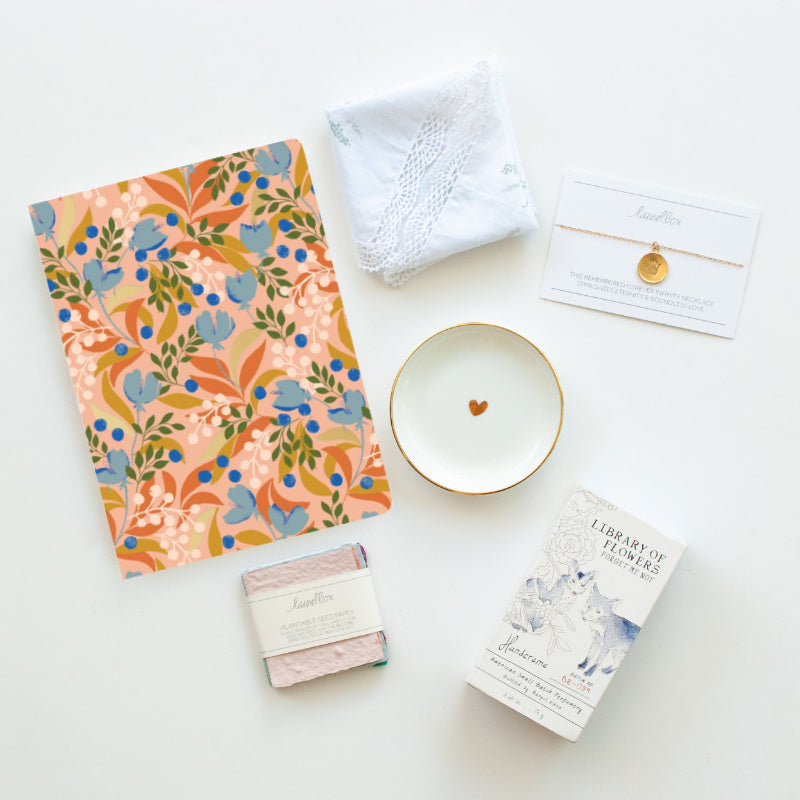
If you want to send something meaningful, a thoughtful sympathy gift can say what words sometimes can't. At Laurelbox, we've spent years curating gifts specifically for people navigating grief, from memorial candles and remembrance wind chimes to personalized keepsakes that honor the person who was loved. Sometimes the most powerful thing you can offer someone is a tangible reminder that they are seen, and that their loved one still matters.
You Are Allowed to Find October Hard
Grief is not a problem to be solved. It is love with nowhere to go, and in October, when the world is draped in symbols of death that feel nothing like the real thing, that love can feel especially raw and exposed.
You are allowed to find this month hard. You are allowed to skip the haunted house or cry in the candy aisle and feel a complicated mix of things when the trick-or-treaters come to the door. You are also allowed to light a candle, say their name, and find a small, quiet way to carry them with you into the next season.
There is no right way to grieve in October. There is only your way, and your way is enough.
If you're in a season of grief right now and need additional support, please consider reaching out to a grief counselor or therapist. The American Psychological Association offers resources for finding support. You don't have to carry this alone. We’d also love you to join our Laurelbox community through social media.
I’m praying that next autumn you’ll be in a place to agree with Anne Shirley from the beloved Anne of Green Gables, "I'm so glad I live in a world where there are Octobers.”
Frequently asked questions
Why does grief feel worse in October?
Is it normal to feel scared during grief?
How can I handle Halloween if I'm grieving?
What is Wave of Light on October 15?
How can I support someone grieving during Halloween?
Lanna Britt
Lanna Britt was a national news producer in Washington DC for nearly a decade covering politics, breaking news and current events. She now lives with her husband and three children in Richmond VA. She has two sweet babies she’ll meet again in heaven.


Keep reading