25 Meaningful Ways to Support Someone After Baby Loss in 2026

25 Meaningful Ways to Support Someone After Baby Loss in 2026
Supporting someone after the loss of a baby is one of the most sensitive, meaningful acts you can offer. I know this first hand through losing our son Cooper at full term and another baby at 11 weeks. The right combination of presence, practical help, and long-term care can break the isolation of grief and provide comfort that endures long after flowers fade. This guide gives you 25 concrete, compassionate ways to help—rooted in evidence and real experiences from yours truly —so you never have to wonder what to say or do.
Every baby loss and grief journey is unique. Should I say it louder for those in the back?? Please keep that in mind. Your miscarriage story isn’t mine and my stillbirth story isn’t your aunt’s. This guide addresses miscarriage, stillbirth, and infant death with up-to-date statistics and trauma-informed strategies. You'll find specific phrases, actionable support ideas, and thoughtful gestures—including curated sympathy gift options—to help you provide support that truly matters.
Key Takeaways
- Silence and avoidance cause additional pain; showing up and acknowledging the loss is crucial and oh so important!
- Practical support like meals and errands relieves stress when cognitive function is impaired by grief and small tasks seem insurmountable.
- Tangible, meaningful gifts (such as curated memory boxes) offer lasting comfort when words are not enough.
Disclaimer and Content Warning
This guide discusses pregnancy loss, stillbirth, and infant death. Please proceed with care, and remember that grief is deeply personal. No single gesture or phrase can "fix" this pain, but your compassion and presence can make a meaningful difference. If you are reading this and it feels “too soon” I absolutely get it. Give yourself lots of grace and come back when you are ready.
Understanding Baby Loss and Why Your Support Matters
Pregnancy loss and infant death are heartbreakingly common. Here are some key statistics:
- Affecting 10% to 20% of known pregnancies, with about 80% of miscarriages occurring in the first trimester.
- Stillbirth impacts roughly 1 in 175 pregnancies in the US, resulting in about 21,000 losses annually.
- The neonatal mortality rate (babies passing before reaching 28 days of age) is about 13,000 deaths per year, in the US.
Despite its frequency, baby loss is often stigmatized and silenced, leaving parents to grieve alone. Many supporters worry about saying the wrong thing, so they say nothing at all. I get it. The loss of a baby is heartbreaking and we Americans aren’t super comfortable with sitting in loss. However, silence from loved ones can be perceived as indifference or even erasure of the baby's existence, compounding trauma. What grieving parents need most is acknowledgment, validation, and ongoing presence—not perfect words. This guide equips you with immediate support ideas, long-term care strategies, and what to avoid, so you can provide the comfort they truly need.
Losing a baby can feel overwhelming and heartbreaking. If you are supporting someone after child loss, know your support matters and is needed. In the picture, our son’s handprints and footprints were captured after he was stillborn at 36.5 weeks.

What to Say: Words That Provide Comfort
- Acknowledge the loss by name. Use the baby's name if one was given: "I'm so sorry about [baby's name]." Naming the baby affirms their significance and helps the parents know their baby won’t be forgotten.
- Express care with no pressure to respond. "I'm here for you—no need to reply." This removes the burden of reciprocity and lets them know your support is unconditional.
- Validate their grief. "This is a real loss, and your feelings are valid." Avoid minimizing pain or suggesting they "move on."
- Offer specific help. "Can I bring coffee and breakfast tomorrow?" or "I'd love to drop off dinner on Tuesday. Does 5 PM work, or should I leave it on the porch?" Specific, closed-ended offers are far easier for grieving minds to process.
- Ask permission to keep in touch. "Would it be okay if I texted you this week?" This respects their space, while showing ongoing care.
Example sympathy messages:
- "I don't know what to say, but I want you to know I'm thinking of you."
- "I was thinking of [baby's name] today."
- "It's okay not to feel okay. I'm here whenever you need."
Every Laurelbox comes with a free sympathy card so you can write your own gift message. If you still need help with what to say after reading this blog, send us an email at info@laurelbox.com and we’d be happy to help you craft the right message!
What NOT to Say: Phrases That Cause Harm
6. Avoid 'At least...' statements. Phrases like "At least you can get pregnant," or "At least it was early" attempt to minimize the loss and are universally identified as harmful by grief experts.
7. Don't use platitudes or religious explanations unless you know their beliefs. "Everything happens for a reason" or "It was God's plan" can feel dismissive and invalidate deep pain. Please don’t say, “God needed another angel.” Just don’t.
8. Never compare losses. Avoid referencing your own experiences unless invited; each loss is unique. Also, never ever compare with the loss of a pet!
9. Don't suggest "trying again" or minimize their identity as parents. Statements like "You're young, you can have another" diminish the grief of losing this specific child.
10. Don't ask invasive questions about what happened. Let the parents share details if and when they're ready.
These phrases hurt because they deny or redirect grief, making parents feel unseen or pressured to "look on the bright side" before they're ready. Brene Brown has a wonderful explanation about empathy vs sympathy. Choose empathy every time.
Empathy is so important. The above video explains how empathy allows the grieving individual the space to feel whatever emotions arise and avoids trying to “fix” anything.
Immediate Practical Support (First Days and Weeks)
11. Deliver meals or arrange food without requiring decisions. Grief impairs cognitive function, making even small decisions overwhelming. "I'm dropping off dinner tomorrow—I’ll bring you soup and bread. If that doesn’t sound good, just let me know." After we lost Cooper, so many people brought us meals and that meant so much to our grieving family.
12. Offer childcare for siblings. "I'd love to take your kids to the park on Saturday if that would help." This gives parents space to rest or attend appointments. If you drop off a basket, include some small age-appropriate busy toys for children in the house.
13. Handle household tasks. Offer to do laundry, clean, or pick up groceries: "I'm at the store and can pick up some basics. Let me know if there’s something specific you need."
14. Manage communications if requested. Offer to update extended family or handle social media announcements to reduce their emotional burden.
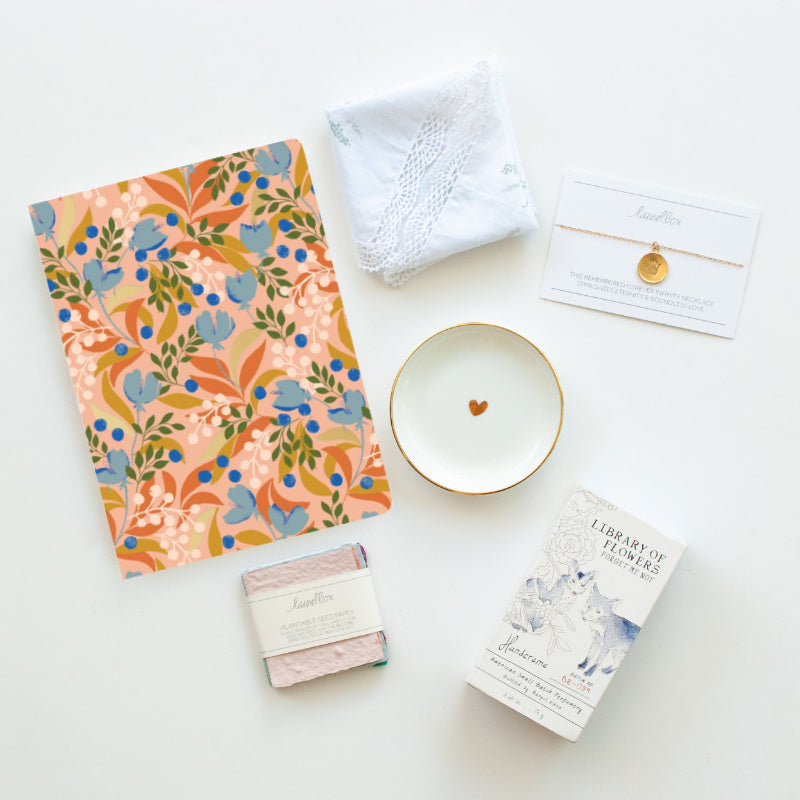
15. Send a comfort care package. Curated sympathy boxes from laurelbox include self-care items, comforting treats, and beautiful keepsakes that honor. You can also create a DIY basket with thoughtful items.
Initiative-based support helps grieving parents function when articulating needs is impossible. Avoid open-ended offers like "let me know if you need anything." Show up in whatever way you think will be most helpful to the family but do just that - show up!
Meaningful Gestures and Gifts
16. Memorial or keepsake jewelry. Necklaces featuring the baby's footprint or birthstone (like Laurelbox's Raw Cut Birthstone Necklace) offer a discreet, daily way to honor their child.
17. Memory box or book. Gift a beautiful box or album for hospital bracelets, photos, and mementos. As heartbreaking as it was to leave the hospital with a memorial box instead of a living child, we treasure our keepsake box that has hand and footprints, a wisp of hair and other deeply personal mementos of our son.
18. Comfort items. Weighted blankets, custom candles, or self-care essentials help nurture physical and emotional healing.
19. Plant a tree or give to a baby loss organization in the baby's name. Living memorials provide a lasting tribute or find a non-profit you connect with after searching “baby loss organizations.”
20. Commission custom artwork or poetry. Personalized creative gifts can capture the baby's story in a way words cannot.
Curated gift boxes show thought and care, relieving the griever of the burden of choosing what might help most. Many parents find these tangible items more comforting than flowers, which fade and can become a painful metaphor. Even though I appreciated the flowers we were sent, I’d much rather have received more beautiful items from Laurelbox!
I have assembled a number of DIY care baskets in addition to sending Laurelboxes. If you are wondering what to include I would suggest items like tissue boxes, chapstick, pretty adult coloring books and pencils, healthy snacks, a bottle of wine or sparkling water, and dark chocolate and if there are siblings throw in some age-appropriate toys and coloring books for them as well.


Long-Term and Ongoing Support
21. Remember important dates. Mark the baby's due date, loss date, or would-be birthday with a message or small gesture: "Thinking of you and [baby's name] today." Put reminders in your phone and send a snail mail card a week before the date. My friend mailed cards across the country to me the first year during important dates and holidays and it meant the world to me.
22. Continue checking in weeks and months later. Grief doesn't end after the funeral or memorial service—ongoing messages show their loss is not forgotten. Schedule reminders every Monday that say “Thinking about you and letting you know I haven’t forgotten (name) and am always here to listen or just sit with you.”
23. Include their baby in family counts and conversations. Say "You're a mother/father" rather than "You'll be a parent someday." This honors their identity. The first Mother’s Day and Father’s Day after losing a baby is especially hard and comes with SO many complex emotions. Acknowledge them as parents and let them know you see their pain and grief.
24. Support subsequent pregnancies with sensitivity. Acknowledge fears and anxieties without assuming "everything will be fine." Losing a baby at full term and another baby late in the first trimester meant I never felt truly “safe” no matter what gestation week I was at. Be supportive and don’t assume you know how the parents are feeling.
25. Attend memorial services or awareness events. Offer to accompany them to remembrance walks or light a candle together on October 15th, the global 'Wave of Light' day.
Perinatal grief is cyclical and often intensifies on anniversaries. Your ongoing presence is a powerful antidote to isolation.
Supporting Different Relationships and Situations
Support looks different depending on your relationship to the grieving family. For close friends, deeper involvement in daily life and memory-keeping may be appropriate. For acquaintances or colleagues, a heartfelt card and practical help can still mean a great deal.
Partners and spouses
Non-birthing partners often suppress their own grief. Ask directly, "How are you coping?" and validate their loss as equal. Realize that the mom is probably going to grieve in a different (in my experience a deeper more intense way) than the father or partner.
Siblings
Avoid euphemisms. Use clear, age-appropriate language: "The baby's body stopped working, and they died." This prevents confusion and anxiety. There are some books out there. Our living child was nearly two when we lost Cooper so he really didn’t understand until he was older.
Workplace
Respect privacy but offer flexibility. Compassionate workplaces that offer clear bereavement leave and flexible return-to-work policies help employee recovery. Check out our workplace guides like “Corporate Sympathy Gifts” “Appropriate Ways to Support a Coworker Through Grief” and especially “Navigating the Workplace After Child Loss” for additional resources.
Cultural and religious differences
When unsure, ask about traditions or rituals that matter most to the family. Respect varied grieving practices and faith traditions.
Taking Care of Yourself as a Supporter
Supporting someone through baby loss can sometimes bring up secondary grief. It's normal to feel sadness, helplessness, or even distress as you witness a loved one's pain. The 'Ring Theory' of grief suggests that comfort should flow inward (toward parents), while your own emotional needs should be processed outward—with friends, therapy, or support groups.
Set boundaries when needed, and recognize when you need a break. Your sustained compassion matters more than intensity. If you feel overwhelmed, seek your own counseling or connect with support networks for friends and family of the bereaved.
I can vividly remember a few years after we lost Cooper, I was asked to go to the hospital to support a grieving family whose daughter was stillborn around 22 weeks. I knew and understood what that pain felt like and the absolute heartbreak they were experiencing. I’m so thankful I could support them and hold their sweet tiny daughter in my hands, but I’d be lying if I didn’t say that I kept it together inside the hospital but once I got to my car I broke down. So many memories of delivering Cooper came flooding back. I needed some time after that to come back to equilibrium. It’s okay to protect your own heart and take a few steps back if you aren’t in a good mental place to support someone else.
Additional Resources and Support Organizations
No friend or family member can meet all the needs of someone grieving a baby. Encourage connections with organizations that offer expert support:
- Share Pregnancy & Infant Loss Support: National community and resources
- Star Legacy Foundation: Stillbirth research and support groups
- Now I Lay Me Down to Sleep: Free remembrance photography
- Sands (UK) and Tommy's (UK): Statistical data, peer support, advocacy
- Postpartum Support International: Helpline and online support
- Laurelbox: Curated sympathy gifts and comfort boxes for miscarriage and infant loss
Professional grief counseling, online forums, and local support groups are a great resource as well.
Some books I found helpful after losing a baby include “Grieving the Child I Never Knew” by Kathe Wunnenberg as well as “Anchored: A Bible Study for Miscarriage, Stillbirth, and Infant Loss” by Erin Cushman. The latter had a variety of stories from real women who have experienced such sad tragedies. The adage “Misery loves company” is real and it helped me feel less alone when I could read about other people’s sad stories too.
I would also add a movie recommendation. A few years ago I watched “The Starling” starring Melissa McCarthy on Netflix and I think they did an impressive job of showing the complicated emotions that accompany losing a child. I cried, I laughed and I connected with the characters in a real way. I highly recommend it, though be sure to have some tissues nearby and know the entire storyline is centered on infant loss.
Frequently Asked Questions
What is the best thing to say after a baby loss?
The most helpful thing you can say is something that acknowledges the loss and the baby's significance. For example, "I'm so sorry about [baby's name]." Using the baby's name, expressing care without expecting a reply, and validating their grief are all comforting approaches. Avoid platitudes or minimizing statements.
How can I help practically in the first few weeks?
Offer tangible help such as delivering meals, offering childcare for siblings, handling household tasks, or managing communications if requested. Initiative-based support—like dropping off a meal or sending a curated comfort package—can be especially helpful when grieving parents are unable to articulate their needs.
What should I avoid saying to someone after baby loss?
Avoid phrases that begin with "At least..." or suggest that the loss is replaceable. Do not offer platitudes, religious explanations (unless you know their beliefs), or compare losses. Never suggest "trying again" or ask invasive questions about what happened. When in doubt, say something like, “Nothing I can say will make this better. But know I’m here for you and I love you.”
How can I support someone in the long term?
Continue to check in weeks and months later, remember important dates like the baby's due date or loss date, and include their baby in family conversations. Ongoing presence and acknowledgment help reduce feelings of isolation and validate their grief journey.
Conclusion
Supporting someone after baby loss is not about fixing the pain or finding perfect words. It's about presence, practical action, and respect for their unique journey. Acknowledge the loss, use the baby's name, and provide concrete help—whether that's a meal, a memory box, or simply remembering important dates. Avoid platitudes and quick fixes; instead, let your care be steady and sincere. If you need a tangible gesture, thoughtfully curated sympathy gifts from laurelbox can help express what words cannot. Above all, remember: your consistent compassion, even in small acts, can make an enduring difference. If you or someone you know is struggling, reach out to a professional support organization for expert care.
Lanna Britt
Lanna Britt was a national news producer in Washington DC for nearly a decade covering politics, breaking news and current events. She now lives with her husband and three children in Richmond VA. She has two sweet babies she’ll meet again in heaven.


Keep reading