Losing Her Mom, Finding Peace: A Daughter's Story of Caregiving, Anticipatory Grief, and Support

Losing Her Mom, Finding Peace: A Daughter's Story of Caregiving, Anticipatory Grief, and Support
I had the opportunity to meet Kelsi a little over a year ago through a small group at our church, and I was immediately struck by her ability to remain grounded while navigating some incredibly difficult circumstances. Her grounded perspective and strength were evident within minutes of talking with her.
For the last two years, Kelsi supported her mom through her breast cancer journey. Sadly, her mom passed away just two months ago. Kelsi graciously took some time to reflect on what it was like to care for her mom, navigate the final weeks of her life, and begin the journey of grief—all while raising her two daughters.
Grab a cup of coffee or tea and settle in to hear from a woman whose faith, honesty, and grace offer meaningful lessons for anyone walking through caregiving, loss, or supporting someone they love.
More Than a Mom: A Friend, Confidante and Source of Wisdom
Lanna: First, tell me a little bit about your mom and what you miss most about her?
Kelsi: I actually had someone ask me that recently. I just sat there for a second and I realized I truly cannot tell you the one thing I miss the most because she was so intertwined in my life. She was a huge piece of my existence and it feels like that piece is missing. We talked on the phone almost every day. It was just a constant stream. When the girls would lose a tooth, she's the first one that we would call or if I was having a bad day, she’s the first one that I would reach out to. I knew that not only would she be loving and supportive, but she would also give really good advice from both a godly perspective, but also the wisdom of living life and having to build resiliency. In our conversations, I knew I wasn’t going to just call someone and hear what I wanted to hear. I knew I’d hear what I needed to hear. And most of the time, she’d also pray for me. And I know that she's praying for me all the time now.
Kelsi spent the last two years supporting her mom as she fought breast cancer for a second time. Kelsi and her daughters loved spending time with their “Neeni,” pictured above.

Choosing Peace in the Midst of Cancer
Lanna: How did your mom respond to her cancer diagnosis, since this was her second time fighting breast cancer?
Kelsi: She did not have a super easy life and it would have been very easy for her to turn bitter, especially after everything she went through. She had every right to feel angry with God but she never was. From the time that she told us the cancer had returned, she maintained such a peace. And even when she was going through treatments and chemo and surgeries and not feeling well, she still had such a positive, peaceful attitude. And I always felt like, “How can I possibly feel bad about this when she's the one walking through this and has this attitude?”
I have had this conversation with my older daughter all of the time that life is just unfortunately going to be hard. There are going to be good times, but there are also going to be really bad times. And if we wait for the good times, and if we only operate under good conditions, then we're never going to have peace. We have to be willing to say, I'm going to choose peace. I'm going to choose joy in the midst of whatever my circumstance. Obviously most of that comes from God. It’s a peace that passes understanding. It truly is. And that is just something I'm so thankful my mom embodied and followed through until the very end.
Kelsi’s mom, Kelly, maintained a positive peaceful attitude throughout her cancer treatments, choosing to find joy despite her circumstances.

Saying Goodbye and Making Peace With Loss
Lanna: Is there a conversation with your mom towards the end that you remember fondly?
Kelsi: The benefit to a long illness is that we didn’t leave anything unsaid. I did express to her that we're going to be okay. I told her something like, ‘I am incredibly sad that we don't get to do life with you anymore and just have you here with us. However, we've had so many conversations around your quality of life and what you want out of your life. And I know that this is not it. Because we know where you're going, and we know that you're going to be healed in whatever capacity that looks like in heaven. I am excited for you. I know that's what you would want for us is to continue to live and be happy, knowing that you're in the best place ever. We're going to miss you. We’re going to be sad. But we're going to be okay.’ And we had a few of those discussions.
Lanna: Did grief feel different from what you expected?
Kelsi: Yes, I think because of the cancer journey. Grief was mixed with relief, honestly, because watching what a life-filled person she was sort of deteriorate into this shell of a person physically was just incredibly difficult. Knowing she was not going to have to be this way for much longer, really did provide some relief. And I truly felt happiness for her. There was a sadness for us that we didn't get her anymore. But also recognizing that I didn't want to have this version of her.
The Permission to Ask for Help
Lanna: Is there something you wish someone had told you at the beginning of your caregiver journey?
Kelsi: I think the best thing that a loved one can hear is that you are released from having to be a caretaker. Your love does not directly correlate to physical caretaking for a person. Because the reality of the situation is they are not going to be here in the long term. And you are. You cannot burn yourself out to the point that you are unable to take care of yourself, your kids or your spouse or whoever else is relying on you.
It's almost like when you think about a newborn baby, how you're exhausted and you're pouring all this time and energy and effort and all of your entire focus is on this thing. It's for the end reward of raising this little human being. But in this situation, you're doing the same thing, but it's just to get someone to death. And then that's it. And so that's a weird kind of place to be in.
Lanna: What would you say to someone who is exhausted from being a caregiver but feels guilty admitting it?
Kelsi: I think that it's healthy to bring in support, whether that be hospice, whether there is hopefully an ability to bring in some type of caretaking support, even if it's just for a couple of hours a day, to know that you are not going to be the one that is fully relied upon, especially when things become very physically demanding. Turning people, changing them, trying to bathe them, all of those things, if you don't have any experience is a huge learning curve. My stepdad even really struggled with the feeling like you're giving up on the person, or maybe you don't care or love that person enough if you're not willing to do it all yourself. And I strongly feel that’s not true at all. If you are able to take care of yourself, you're then able to actually be present and engaged more fully with that person, instead of getting to a point where you're just in survival mode. So I am a huge advocate for bringing in as much help as you possibly can.
Keeping Her Mom Close As Life Moves Forward
Lanna: How do you keep your mom’s memory alive as you begin to raise your girls without her?
Kelsi: When we talk about keeping her memory present I think it's one of those things where she was so intertwined that not a day goes by I don't think about her. One thing that I do with my girls often, and this is my goal for them, is to not view death as simply sadness and the end. The day after my mom died I started asking them, ‘What do you think Neeni is doing right now?’ and making it very light because I believe our life continues in a much better way in heaven. It's sort of been a fun way to think about her. Sometimes it could be as much as ‘I think she's having the biggest ice cream sundae ever!’ or ‘I think she's still asking God questions because she had so many questions.’ My daughter once said, ‘I bet she's petting Zachariah,’ which was her old cat. I’m simply trying to help them feel a sort of connection to the fact that she's not really gone. Yes, she’s no longer physically here but she's having the time of her life in heaven and we can't quite wrap our brain around exactly what that looks like and that’s okay.
Kelsi wanted to keep a connection between her girls and her mom, even after she had passed. Now she often asks her daughters what they think their grandmother is doing in heaven at any given moment.

The Words That Help Least—and What to Do Instead
Lanna: During this whole process of caring for your mom and then losing her, what helped and what didn’t help from those around you?
Kelsi: I hate asking for help, as I think most women do. But one thing I’ve come to realize through caregiving and losing loved ones is that I’ve developed a real distaste for the cliché comment, ‘Let me know if there’s anything I can ever do’ or ‘Let me know if we can ever help.’ I know I’ve said it to people in the past, but it’s something I don’t say anymore. I think it’s such an easy thing to throw out there, almost like saying, ‘We’ll be praying for you.’ It really just helps the person saying it to feel better, but it’s not actually helping in any tangible way.
What was actually helpful were the people who took the initiative instead of waiting for me to ask. One friend texted me and said, ‘Hey, I have a couple of people from my church who have committed to making sure you have meals twice a week for the next month.’ Things like that truly allowed me to take a deep breath. Knowing that on Tuesdays and Thursdays for a month, meals would be dropped off was so helpful. I would never have put that ask out there myself, but having someone take the initiative made such a difference.
Another friend would text me and say, ‘Hey, I don’t have anything going on Thursday or Friday. Is there a good day this week for me to take the girls? I’d like to pick them up and have them for the day.’ There were truly days when I remember crying and thinking, ‘God, I don’t feel like I have it in me today to parent. My emotional and physical tank is on empty, and I just can’t.’ Then, all of a sudden, I’d get a text from a friend offering to come get my girls for the afternoon. I would just think, ‘Oh my gosh, thank you, God,’ because I wouldn’t have reached out and asked.
It was simply knowing that someone was dropping something off on my doorstep or taking my kids for a few hours. Really it can translate to anything. Drop off breakfast, bring over coffee or a basket of snacks or games for the kids. I had a friend who went to Trader Joe’s a couple of different times and put together a tote filled with snacks and little activities for the kids. These are things that might not take much time for someone going about their normal day, but they mean so much to the person receiving them.
Same goes with “We’ll be praying for you.” Some friends would tell me they were praying for me and then literally send me the prayer they had prayed that morning. Even just being able to read those words was so helpful. It showed me they truly were praying and weren’t just throwing out a platitude. Ultimately, I think it’s about being careful not to make empty offers. Don’t wait for someone who is overwhelmed and exhausted to tell you what they need. Take the initiative, find a practical way to help, and show them they don’t have to carry everything on their own.
Kelsi suggests showing up in small tangible ways for those grieving or caring for a terminal relative. Drop off dinner or bring a basket of snacks. Little gestures go a long way in showing support.


A big thank-you to Kelsi for generously sharing her story with our Laurelbox community. ❤️
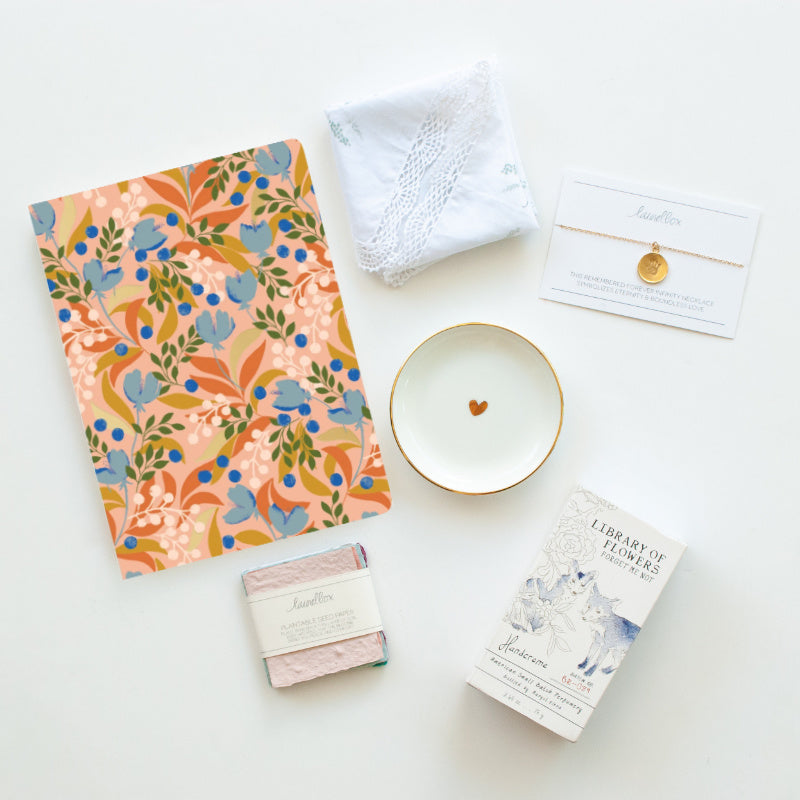
If you're looking for meaningful ways to support a friend or family member who is grieving, consider sending a Laurelbox. From custom memorial candles and personalized wind chimes to other meaningful keepsakes, our gifts are designed to help you show someone they're loved and remembered.
And with the holidays approaching, be sure to explore our Holiday Collection for thoughtful ways to remind someone they're not alone during a difficult season.
Lanna Britt
Lanna Britt was a national news producer in Washington DC for nearly a decade covering politics, breaking news and current events. She now lives with her husband and three children in Richmond VA. She has two sweet babies she’ll meet again in heaven.

Keep reading